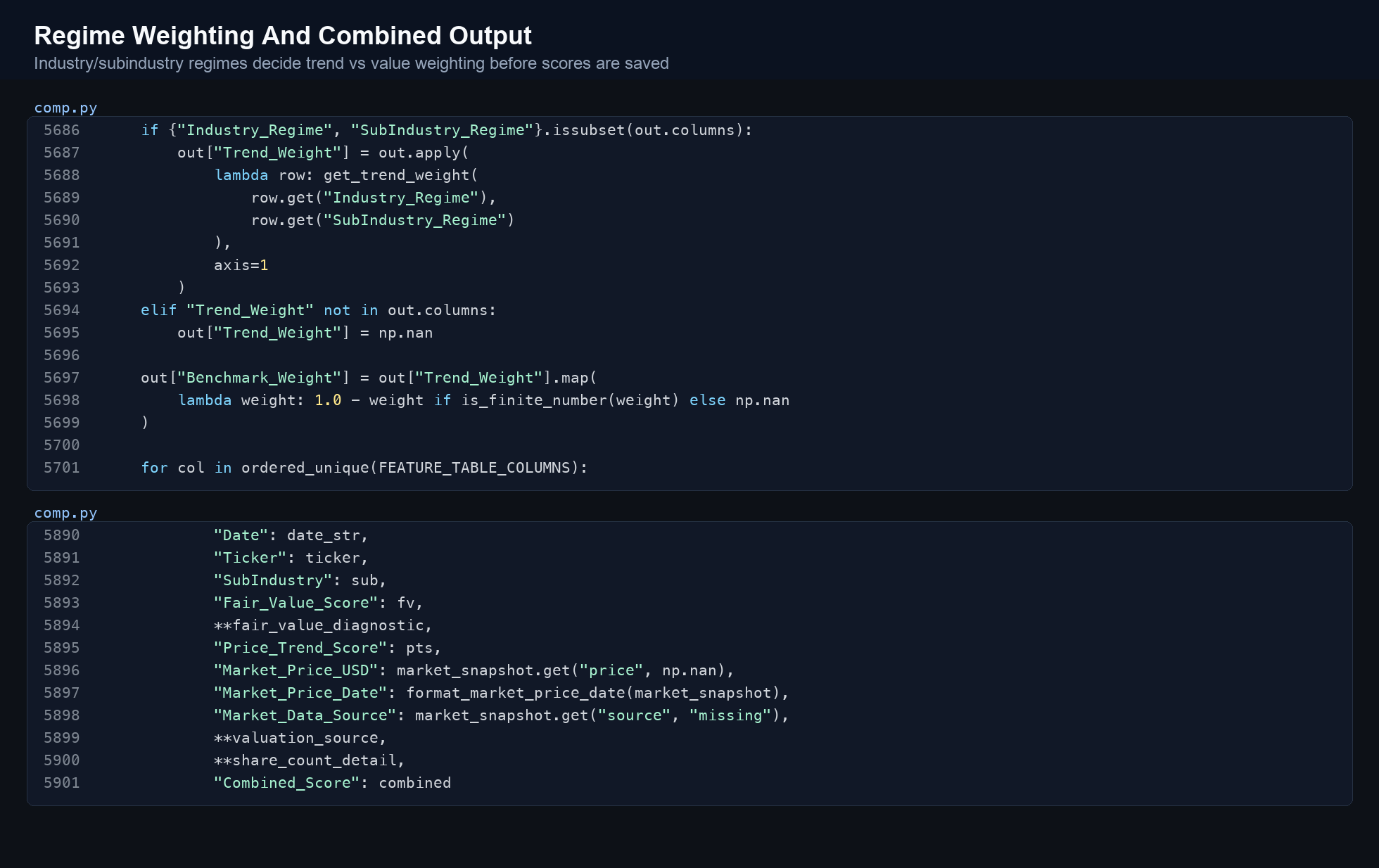
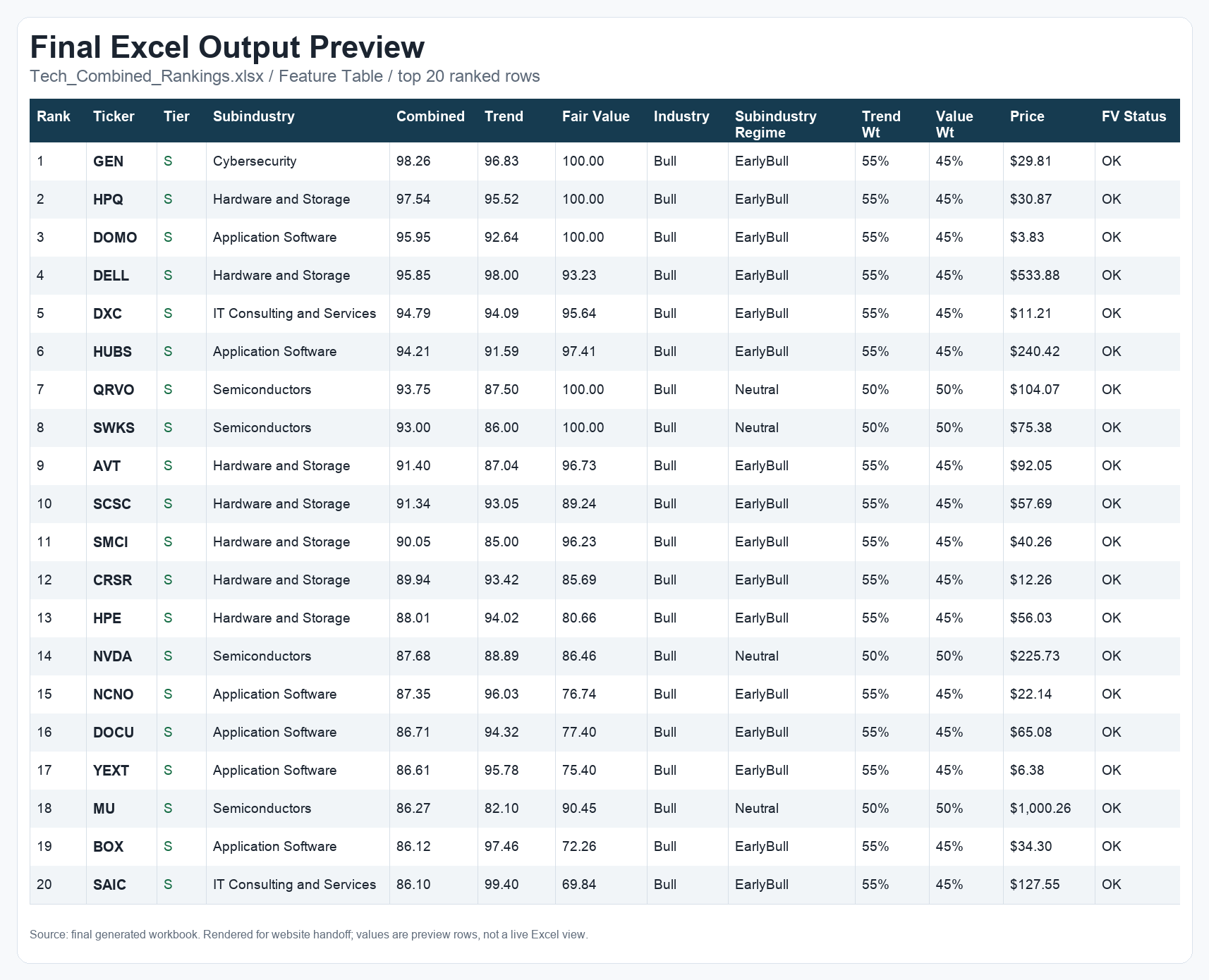
This flow explains the original trend/value design and its transition to the current ranking output. The fixed alpha formula is documented on the Current Model page →
Core idea
Rank each stock by asking two questions: does the company look financially attractive versus its closest peers, and is its price action being confirmed by the stock, subindustry, and broader industry trend? For fair-value benchmarking, “closest peers” means the same technology subindustry plus a size bucket such as Small, Mid, or Large. Regime logic then decides how much the original model should trust trend versus fair value.
How one stock is judged
- Peer setPlace the company inside its subindustry, then use its Small/Mid/Large benchmark bucket for fair-value peer comparisons.
- Fair Value ScoreScore the company’s valuation, growth, cash-flow, profitability, and coverage quality relative to that peer group.
- Price Trend ScoreMeasure whether the stock is participating in a healthy trend using moving averages, returns, new-low penalties, and peer momentum.
- Regime weightsClassify the market, industry, and subindustry backdrop so the original combined score can lean more toward trend in stronger regimes and more toward valuation/risk in weaker ones.
- Ranking outputExport the original combined score for transparency, then use the current alpha score for the website demo ranking and simulated portfolio tests.